- UC Davis
- Best of Friuli
- Questions About Wine
- Chocolate and Wine 101
- Vermont Cheese
- Oregon Wine Country
- Best Chianti Classico
- Best of Cahors
- Wines of the Finger Lakes NY
- Largest Wine List
- Texas Wine
- Champagne
- Puglia Wine and Land
- Best of Playa del Carmen
- Best of Central Coast California - Pt 2
- Best of Central Coast California - Pt 1
- Wine from Virginia
- Bourbon
- Best of Anguilla
- Vodka
- Tequila
- Dessert Wines
- Cognac
- Gin
- Best of Hong Kong & Macau
- Best of Sonoma
- Wines of South Africa
- Beaujolais
- Wines of Sicily
- Wines of Cyprus
- Best Vodka 2004
|
Related Links
|
||
New This Month

Cyprus Wines- 1,000 Years of History
A romantic past- An exciting present- A golden future.
Grape cultivation first appeared in the Black Sea area around 8,000 years ago. From there it spread south-eastwards to Mesopotamia, Syria and Egypt, and then across the Mediterranean to Greece and Italy. Cypriot Archaeologist Dr.Vassos Karageorghis stated- “The archaeological evidence permits us to say that the cultivation of the grape vine started in Cyprus some time in the second millennium B.C.” When the Greeks settled in Cyprus around 1200 B.C., it is likely they found wine already there. Thus, it is likely that there has been a wine industry in Cyprus continuously longer than anywhere else in the world. Legend has it that the first mortal to be taught to make wine was Ikarios, whose teacher was Dionysus, the God of wine. Homer and Euripides praised the excellence of Cyprus wines. Because of problems with sealing vessels to protect wine from oxidation from the air, most early wines would have been sweet. In the 11th Century, during the Crusades, Richard the Lionheart chose the sweet wine of Cyprus “Commandaria” to have with his meals. Invasion followed invasion. Lusignan rule was followed by the Venetians, and then the Ottomans. In 1878 the island was ceded to Britain, and in 1960 Cyprus became an independent republic. In 2004 Cyprus joined the European Union which necessitated new legislature that classifies the islands wines under a Wines of Controlled Appellation of Origin.
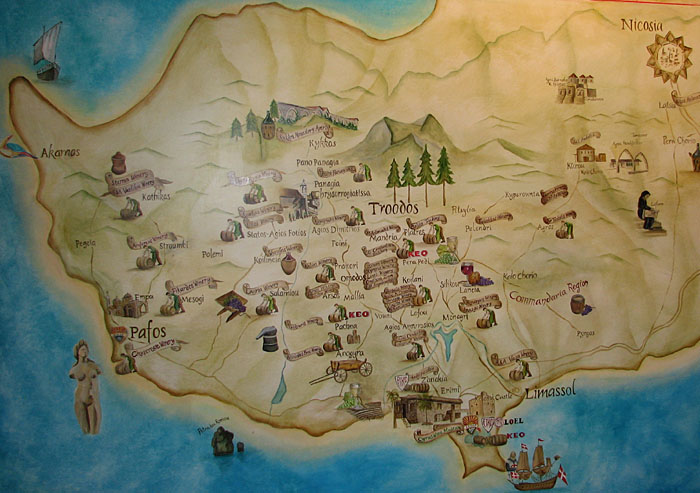
Cyprus wine regions
Cyprus is situated in the southeastern Mediterranean, at the crossroads of the three continents of Europe, Asia and Africa. It is the third largest island in the Mediterranean after Sicily and Sardinia. Not many wine drinkers know where Cyprus is, let alone what wines they produce. Most assume the wines are the same as found in Greece. Today Cyprus is a modern country that effortlessly marries European culture with ancient enchantment. The Cyprus that is recognized by the UN and all countries of the world (except Turkey) has a population of only 800,000. It is a country of alluring beaches and fragrant mountain peaks; vineyards studded with olive trees and citrus groves and ancient ruins on a par with anything seen in Greece and Egypt. The vineyards of Cyprus are mostly on the southern slopes of the Troodos mountain range near Limassol. The second area is in the south-western part of the island near Pafos. The long, sunny Mediterranean summers are a great asset; they ripen the fruit and give it its full flavor. The winters are mild and the gentle winds and breezes check the frosts, dispel the fogs and protect the vines and grapes from fungus diseases (Cyprus remains one of the few phylloxera-free wine-producing countries in the world).
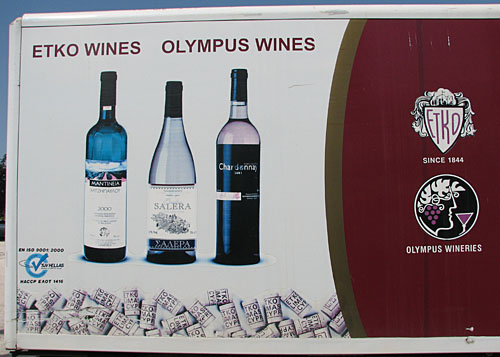
ETKO Winery
The four major wineries on the island- ETKO (privately owned with 800,000 bottle production), KEO (a public company with 4 million bottles), LOEL (a public company selling 2 million bottles) and SODAP (a cooperative with 2 1/2 million bottle sales) once controlled almost all the production. In the early 1980’s the Cyprus government encouraged small wineries, in the 50,000-300,000 bottle capacity, to begin operations. I visited three of the Big Four and 10 of the 56 small wineries (total of 2 million bottles). The islands total production is around 12 million bottles (1 million cases) which does not include the 10 million liters of wine exported in bulk, rather than bottle. To put that in perspective the E&J Gallo Winery produces 75 million cases and Kendall Jackson 5 million cases a year. Before joining the European Union most of the Big Four sales were inexpensive bulk wines shipped to the former Soviet block countries.
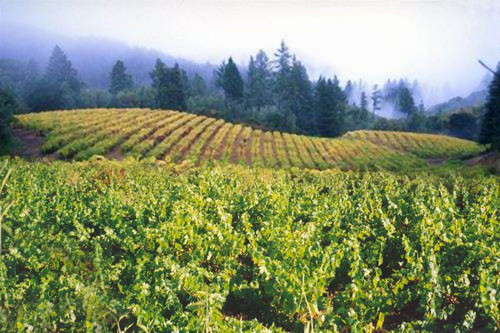
Cyprus vineyards
The purpose of my visit was to see and taste the indigenous grape varieties grown on the island. I skipped the Cabernet Sauvignon, Merlot, Shiraz, Chardonnay, Riesling, Sauvignon Blanc that can grow anywhere in the world. “The aim is to produce not only a superior quality wine but also a wine with an original Cypriot character.” The local wine industry has committed itself to producing quality wine with a true expression of the Cypriot terroir and typicity of the local varietals. Their vision is to reflect the rich history of Cyprus wine and the feelings and character of the Cyprus soil and its people. I opted for Mavro (widely planted red that is best used in blending); Xynisteri (most popular white variety; drink it young), Maratheftiko (not widely planted, but the hope for the future in red wines; ages well), Ofthalmo (small quantity red), Lefkada (red grape brought from Greece), Spourtiko (white), Muscat of Alexandria (technically not an indigenous variety; often blended with Xynisteri to produce sweet wines), and their local fire water spirit Zivania (think Grappa). All the Big Four also produce Cyprus brandy, Ouzo and other distilled products.
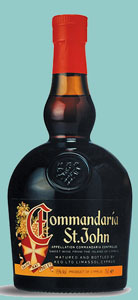
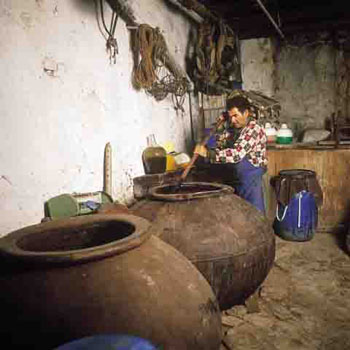
Traditional wine-making in Cyprus
Commandaria is supposedly the oldest “appellation d’origine” wine in the world and has been made on the island since at least 1,000 B.C. It is produced from the indigenous Mavro and Xynisteri grape varieties grown in the confines of the Commandaria Region (14 villages). The grapes are laid out to partially dry in the sun before pressing and fermenting into a dark, sweet wine. The addition of wine-origin alcohol brings the product up to 14-15% alcohol. It spends a minimum of two years in barrels (some as many as 10 years) using the Spanish Solera system. New rules now allow for vintage dating. Total exports are about 60,000 cases.
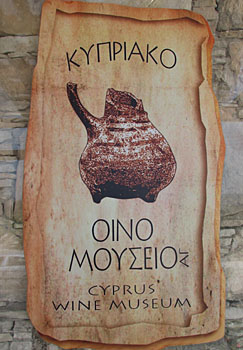
Cyprus Wine Museum
The Cyprus Wine Museum opened in 2004 in the former home of Cypriot composer Anastasia Guy. There are artifacts, photographs, signboards and a ten-minute film with music composed by Ms. Guy. The wine products of 32 wineries are on display in the tasting room.
I visited wineries in the town of Limassol and both east and west of town. Another day I toured the Pafos area about a 1 ¼ hours from Limassol. Most of the wineries visited were labors of love. Some of the owner/winemakers studied oenology in America, Greece, France, and Australia. They have a passion for producing wines that the world would enjoy drinking. Many are imported into the United States but, except for Commandaria, in very small quantities. It is time to try something different, like wines from Cyprus.
For More Information: Comments or questions welcome, please e-mail to: Ron@TheFiftyBest.com
Cyprus Trade Commission – (212) 213-9100
Cyprus Tourism Organization – (212) 683-5280
Nestor Imports – (212) 267-1133
Athenee Importers – (516) 505-4800
Disclaimer: This section of the website is intended for visitors 21 years of age and older.
If you are not of legal drinking age, please exit by clicking here.
Please drink responsibly!
- UC Davis
- Best of Friuli
- Questions About Wine
- Chocolate and Wine 101
- Vermont Cheese
- Oregon Wine Country
- Best Chianti Classico
- Best of Cahors
- Wines of the Finger Lakes NY
- Largest Wine List
- Texas Wine
- Champagne
- Puglia Wine and Land
- Best of Playa del Carmen
- Best of Central Coast California - Pt 2
- Best of Central Coast California - Pt 1
- Wine from Virginia
- Bourbon
- Best of Anguilla
- Vodka
- Tequila
- Dessert Wines
- Cognac
- Gin
- Best of Hong Kong & Macau
- Best of Sonoma
- Wines of South Africa
- Beaujolais
- Wines of Sicily
- Wines of Cyprus
- Best Vodka 2004
|
Related Links
|
||